




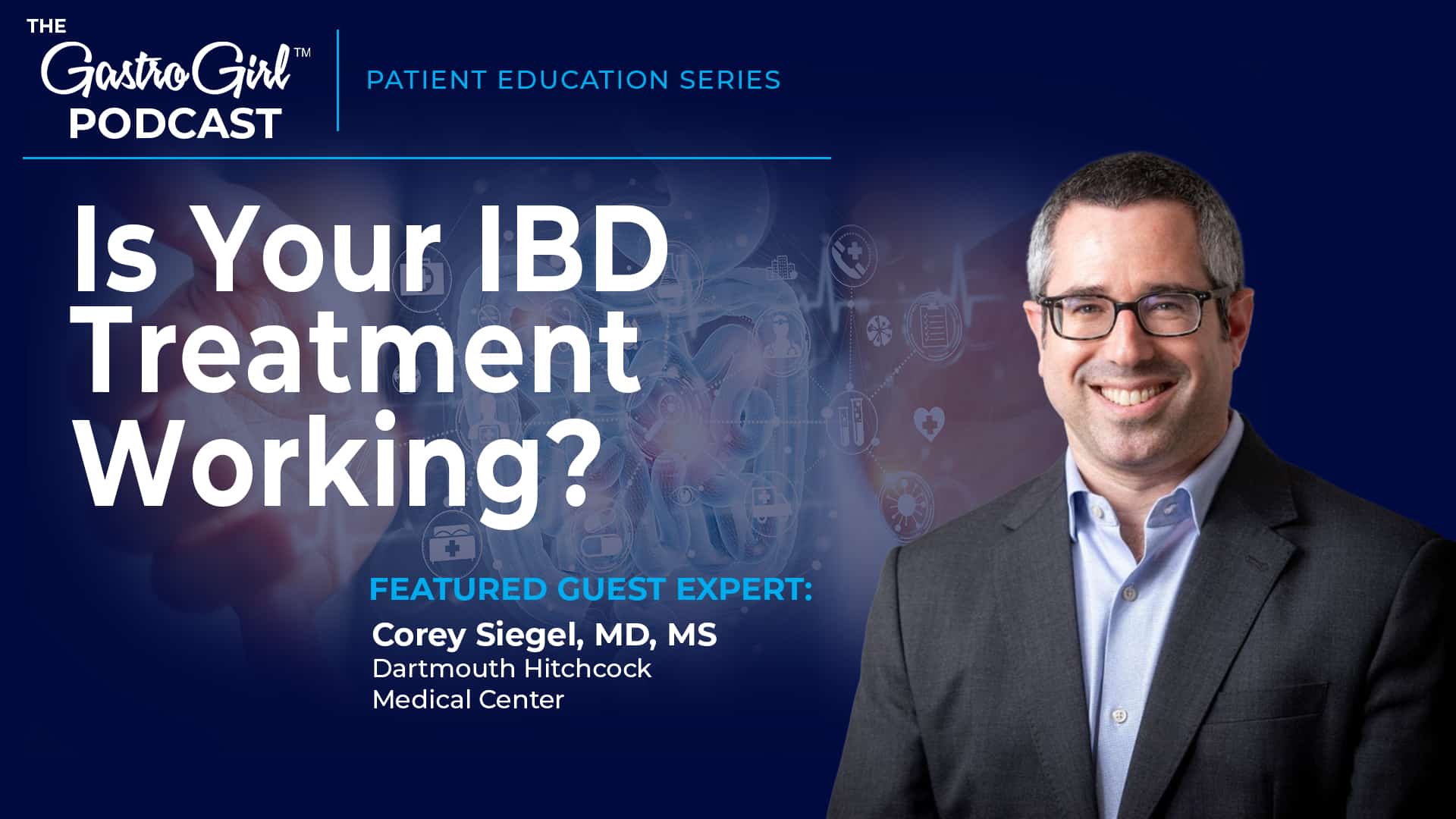

When IBD Treatment Isn’t Working: How to Know When It’s Time to Reassess
Living with inflammatory bowel disease (IBD) often means paying close attention to your symptoms and how well your treatment is controlling the disease. But what happens when you’re still having symptoms; or a treatment that once worked doesn’t seem to be working as well anymore?
In this episode, Dr. Corey Siegel, an IBD specialist and Director of the Center for Digestive Health at Dartmouth Hitchcock Medical Center, joins us to explain how patients and their healthcare teamsa can recognize when an IBD treatment may not be achieving its goals and when it may be time to reassess the treatment plan.
We discuss what successful IBD treatment can look like, why response to treatment may change over time, and how healthcare teams determine whether ongoing symptoms are caused by active IBD or something else.
In this episode, you’ll learn:
- What successful IBD treatment can look like
- How long it may take to evaluate whether a treatment is working
- Why a treatment that once worked may become less effective
- How healthcare teams determine whether symptoms are caused by active IBD or something else
- What treatment optimization means and when a different approach may be considered
- Why your goals, concerns, and preferences matter when making treatment decisions with your healthcare team
Dr. Siegel also explains why ongoing monitoring and open communication with your healthcare team are important and how shared decision-making can help patients and clinicians determine the next steps in IBD care.
This episode was produced by Gastro Girl with support from Sanofi.

This episode was produced with support from:



Listen Now!



Watch the Video Version of this Episode




Featured Guests in this Episode

Corey Siegel, MD, MS
IBD Specialist & Director, Center for Digestive Health, Dartmouth Hitchcock Medical Center

Featured Podcast Episodes
September 8, 2026
Living With IBD: What Remission Looks Like
For many people living with inflammatory bowel disease (IBD), understanding what remission actually means can be confusing. If your symptoms improve, does that mean your IBD is under control? And if you’re in remission, is the disease gone for good? In Part 2 of our conversation with IBD expert Dr. Jessica Allegretti, we explore what remission means in IBD and why feeling better is only one part of the picture. We discuss: - Clinical remission versus endoscopic remission - What mucosal healing means - The treat-to-target approach in IBD care - Why modern treatment goals focus on long-term disease control - How controlling inflammation may help reduce the risk of future complications Understanding both how you feel and what may be happening inside your body can help you have more informed conversations with your healthcare team and take an active role in managing your IBD. Subscribe to Gastro Girl for more expert-led conversations designed to help you navigate digestive health with confidence. This educational initiative is sponsored by Merck.
August 25, 2026
What Does Your Immune System Have to Do With IBD?
Why does the immune system cause inflammation in Crohn’s disease and ulcerative colitis? And what do the gut microbiome, intestinal lining, and genetics have to do with inflammatory bowel disease (IBD)? In this episode of the Gastro Girl Podcast, host Jacqueline Gaulin talks with gastroenterologist and IBD expert Dr. Colleen Kelly about the important connection between the gut and immune system in IBD. Dr. Kelly explains how Crohn’s disease and ulcerative colitis are immune-mediated diseases, why the immune system becomes involved in intestinal inflammation, and how interactions among the immune system, gut lining, genetics, and the trillions of microorganisms that make up the gut microbiome may contribute to IBD. You’ll learn: - How the immune system and digestive tract normally work together - What happens to the immune response in IBD - Why inflammation develops in Crohn’s disease and ulcerative colitis - How the intestinal barrier, or gut lining, fits into the picture - What scientists understand about the gut microbiome and IBD - Why IBD involves much more than digestive symptoms - How understanding the biology of IBD can help you have more informed conversations with your healthcare team Whether you’ve recently been diagnosed with Crohn’s disease or ulcerative colitis, are living with IBD, or are supporting someone who is, this patient-focused conversation provides an accessible foundation for understanding what is happening inside the body and why it matters for managing IBD. This educational initiative is sponsored by Merck.

July 14, 2026
What Is IBD Really Affecting Inside My Body?
Many people living with Crohn’s disease or ulcerative colitis assume that if symptoms improve, their disease is under control. But with inflammatory bowel disease, inflammation can sometimes continue silently, even when you feel okay. In this episode of Gastro Girl, Jacqueline Gaulin speaks with IBD expert Dr. Jessica Allegretti about what IBD may be affecting inside the body and why symptom relief is not always the same as healing. They discuss the difference between feeling better and achieving remission, why ongoing monitoring matters, how flares can develop, and how proactive care may help protect long-term health. This conversation is designed to help patients better understand what may be happening inside their bodies and feel more informed when talking with their healthcare team. This education initiative is sponsored by Merck.



Let’s Keep in Touch!
Subscribe to get the latest news and content delivered straight to your inbox.
Listen to our
latest Podcast!