

New Colorectal Cancer Screening Guidelines: Why GI Experts Are Raising Concerns About Blood-Based Tests
The American Cancer Society (ACS) recently updated its colorectal cancer screening guideline — reaffirming that average-risk adults should begin screening at age 45 and continue through age 75 — while also expanding screening options to include blood-based tests for certain patients.
But the update has sparked significant concern among leading gastroenterologists and digestive health experts.
In response to the new guideline, the American College of Gastroenterology (ACG) released a strongly worded statement cautioning that patients — and even healthcare providers — may misunderstand the role and limitations of blood-based colorectal cancer screening tests.
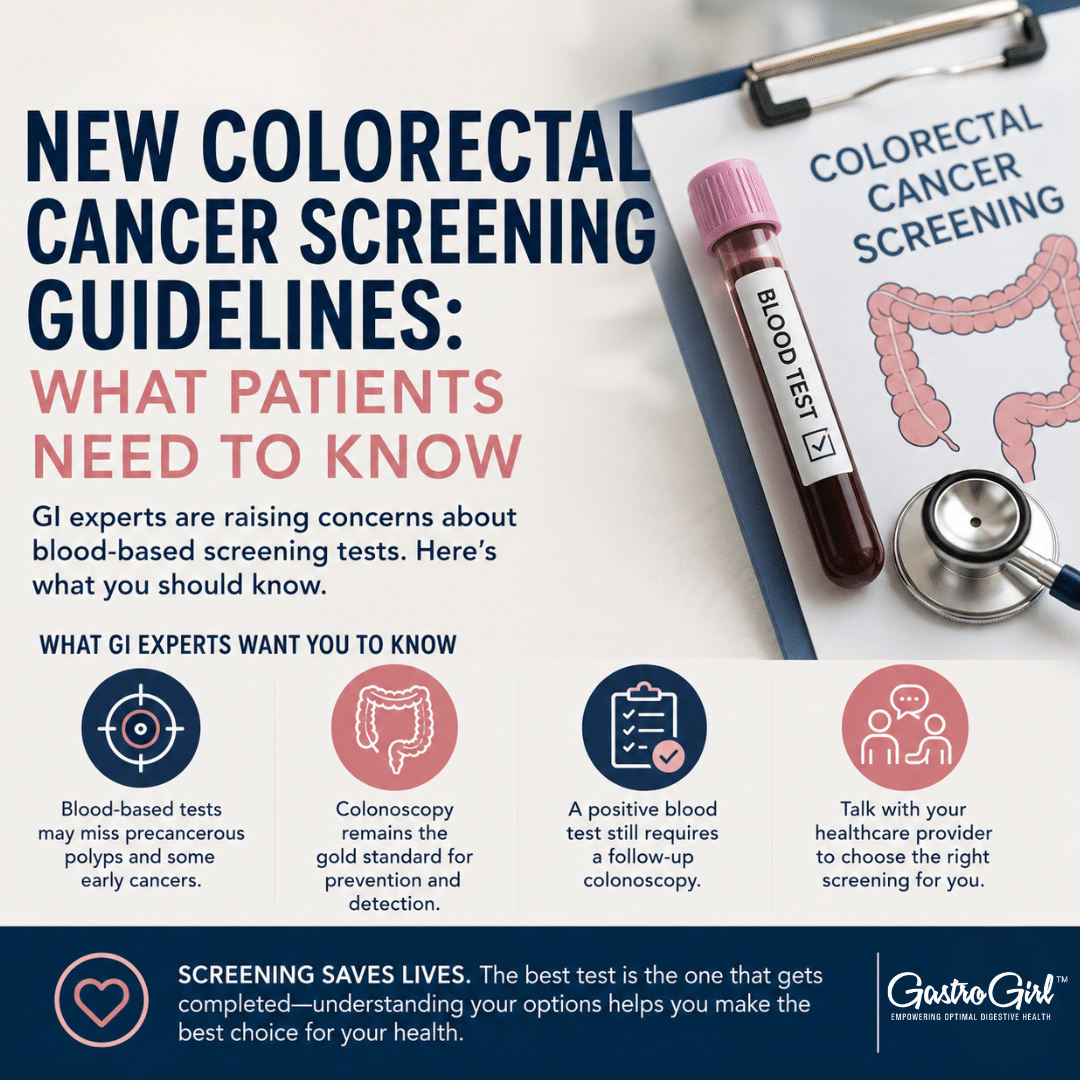
While the ACS guideline includes blood-based screening as an option for people who decline or do not complete recommended screening methods, ACG emphasized that these tests are considered a “not preferred” option because of concerns about lower sensitivity for detecting precancerous polyps and some early-stage cancers.
According to ACG, there is growing concern that simplified headlines, commercial advertising, and excitement surrounding blood-based testing could unintentionally lead patients to choose a less effective screening option without fully understanding the tradeoffs.
The organization warned that:
• Blood-based tests currently detect fewer advanced precancerous lesions than colonoscopy and stool-based screening tests
• Some blood-based tests may miss early-stage colorectal cancers
• A positive blood-based screening test still requires a follow-up colonoscopy
• Patients should first have a genuine opportunity to complete preferred screening methods before turning to blood-based testing
ACG also pointed to an editorial published alongside the guideline in CA: A Cancer Journal for Clinicians, which warned that replacing more effective screening tests with lower-performing blood tests could potentially lead to increased colorectal cancer deaths.
Why does this matter so much?
Colorectal cancer is one of the few cancers that can often be prevented through screening.
Colonoscopy remains the gold standard because it not only detects colorectal cancer — it can also help prevent cancer by identifying and removing precancerous polyps before they become cancerous.
The updated guideline does not replace colonoscopy as the preferred screening method.
Instead, experts say the goal of adding blood-based tests is to increase screening participation among people who otherwise might avoid screening altogether.
At Gastro Girl, we believe patients deserve clear, evidence-based information so they can make informed decisions together with their healthcare providers.
That’s why we recently spoke with Dr. Fola May of UCLA about the updated screening recommendations and what patients need to know right now.
In this episode, Dr. May explains:
• What changed in the new ACS colorectal cancer screening recommendations
• The difference between stool-based tests, blood-based tests, and colonoscopy
• Why colonoscopy remains the gold standard for prevention and detection
• Why follow-up colonoscopy is still required after a positive non-invasive test
• The rise in colorectal cancer among younger adults
• How patients can talk with their healthcare providers about choosing the right screening option
The most important takeaway?
Colorectal cancer is highly preventable — and screening saves lives.
The best screening test is ultimately the one that gets completed, but understanding the strengths and limitations of each option matters.
Patients deserve accurate information, thoughtful conversations with healthcare providers, and access to the screening method that is most appropriate for their individual situation.
About Gastro Girl
Gastro Girl is a trusted digestive health platform dedicated to providing evidence-based education, expert insights, and resources that empower patients to make informed healthcare decisions.


Featured Articles

September 28, 2026
IBS-C: Expert Answers, Patient Perspectives & Resources





Let’s Keep in Touch!
Subscribe to get the latest news and content delivered straight to your inbox.
Listen to our
latest Podcast!